
How jungle assembled itself
A genre built in a few years out of a borrowed drum break, cheap samplers, sound system culture and a licensing crackdown. None of it was planned.
Jungle is usually introduced as a British genre that appeared in the early 1990s, which is true and explains nothing. Genres do not appear. They are assembled, usually out of whatever equipment, records and rooms happen to be available, and usually by people solving a practical problem rather than founding a movement.
In the case of jungle, the assembly happened unusually fast — roughly four years from something recognisable as breakbeat hardcore to something recognisable as drum & bass — and the parts are unusually easy to identify. There are four: a drum break, a sampler, a sound system tradition and a change in the law.
The drum break
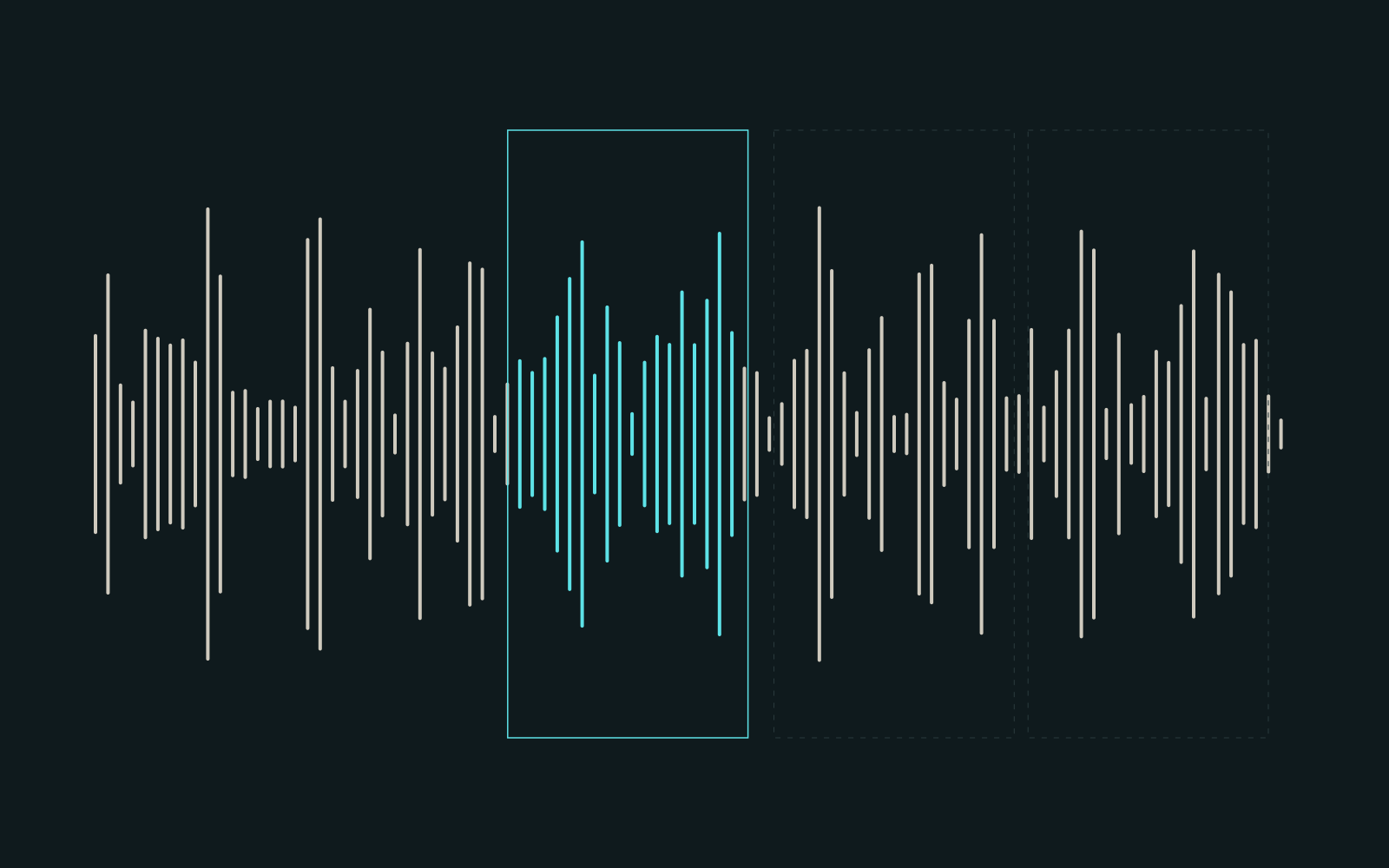
The Winstons released "Amen, Brother" in 1969 as a B-side. Somewhere in the middle of it, the drummer Gregory Coleman plays six seconds alone. That passage — the Amen break — became the most reused piece of recorded music in the second half of the twentieth century, first in hip-hop and then, at much higher speed, in British dance music.
What made it useful was not that it sounded good, though it does. It was that it survived being cut apart. The break is a complete rhythmic idea containing several usable fragments, recorded with enough separation that a producer can isolate a snare, a kick or a crash and put them somewhere else. It behaves less like a recording than like a set of components.
The machine
By 1991 a second-hand Akai sampler cost roughly as much as a decent second-hand car, which put it inside reach of people who were not signed to anything. What the sampler offered was not the ability to copy — tape had done that for decades — but the ability to address sound: to chop a recording into fragments, assign each fragment to a key, and play the result back in an order the original drummer never played.
This is the technical hinge of the whole genre. Once a break is a set of addressable fragments, the tempo of the drums and the tempo of everything else stop being the same question. Jungle producers ran breaks at 160 beats per minute while keeping basslines and vocals at half that, which is why the music can feel frantic and slow at the same time.
- Funk break
- Affordable sampler
- Chopped rhythm
- Two tempos at once
- Jungle
Each step only becomes possible once the one before it is cheap.
The sound system
The other inheritance is Jamaican. Sound system culture arrived in Britain with post-war migration and established, over thirty years, a set of expectations that most British pop did not share: that bass is a physical event rather than a frequency range, that a record can exist in several versions, and that the person operating the equipment is a performer.
Jungle inherited all three. Dubplates — one-off acetates cut for a single DJ — meant a track could circulate in clubs for months before anyone could buy it. MCs came from the same tradition. And the low end was mixed for rooms with serious speakers, which is why jungle can sound thin on laptop speakers and enormous everywhere else. In Bristol, the same inheritance produced a slower, heavier result, which is a separate piece.
A dubplate is a record that exists in one copy and travels in one bag. Scarcity was part of the format.
The law
The fourth component is the least musical. Between 1990 and 1994, British legislation made large unlicensed gatherings progressively harder to hold, culminating in the Criminal Justice and Public Order Act 1994 and its famously specific description of amplified music characterised by the emission of a succession of repetitive beats.
- 1988–90Acid house and the first large outdoor partiesEnforcement is inconsistent and mostly improvised.
- 1990Entertainments (Increased Penalties) ActRaises penalties for unlicensed events sharply.
- 1991–93Hardcore fragmentsThe scene splits between faster breakbeat music and four-to-the-floor styles.
- 1994Criminal Justice and Public Order ActPolice powers extended over gatherings and "repetitive beats".
- 1994–96Jungle moves indoorsLicensed clubs, dedicated labels, and a sound that sharpens as it professionalises.
The effect was to push the scene into licensed venues, which changed the music. Rooms got smaller and better equipped, sets got longer, and the frantic, cartoonish edges of rave culture were sanded off. What emerged by 1996 was more disciplined and considerably less fun, depending on who you ask.
What this explains
Reading the genre as a set of dependencies rather than a lineage answers a few questions that the family-tree version leaves hanging. Why the tempo settled where it did: it is the speed at which a chopped break stays legible. Why the bass sits so low: the rooms. Why it happened in Britain rather than anywhere else: the specific overlap of Jamaican sound system practice, American funk records, cheap Japanese samplers and a hostile licensing regime, all in the same decade.
This piece treats jungle and drum & bass as continuous, which not everyone accepts. The argument for treating them as a break rather than a continuum is worth its own piece, and will get one.
Sources & further reading4
- Energy Flash: A Journey Through Rave Music and Dance CultureSimon Reynolds, 1998The standard narrative account of the period, and the origin of the "hardcore continuum" argument.
- Criminal Justice and Public Order Act 1994legislation.gov.uk, 1994Section 63 contains the "repetitive beats" definition.
- Bass Culture: When Reggae Was KingLloyd Bradley, 2000Background on sound system practice and its arrival in Britain.
- Amen breakThe Winstons, "Amen, Brother", 1969The recording itself remains the best primary source.